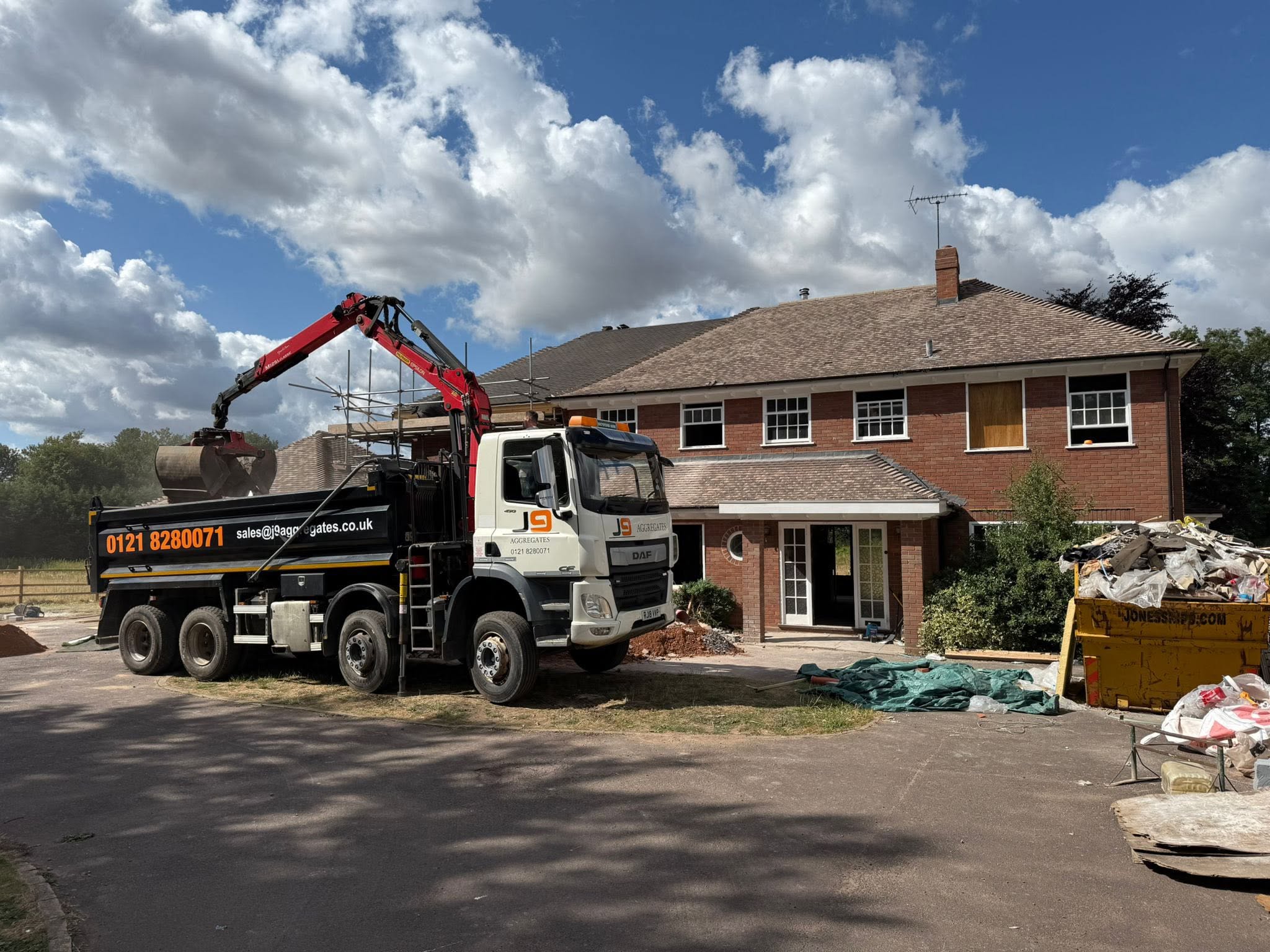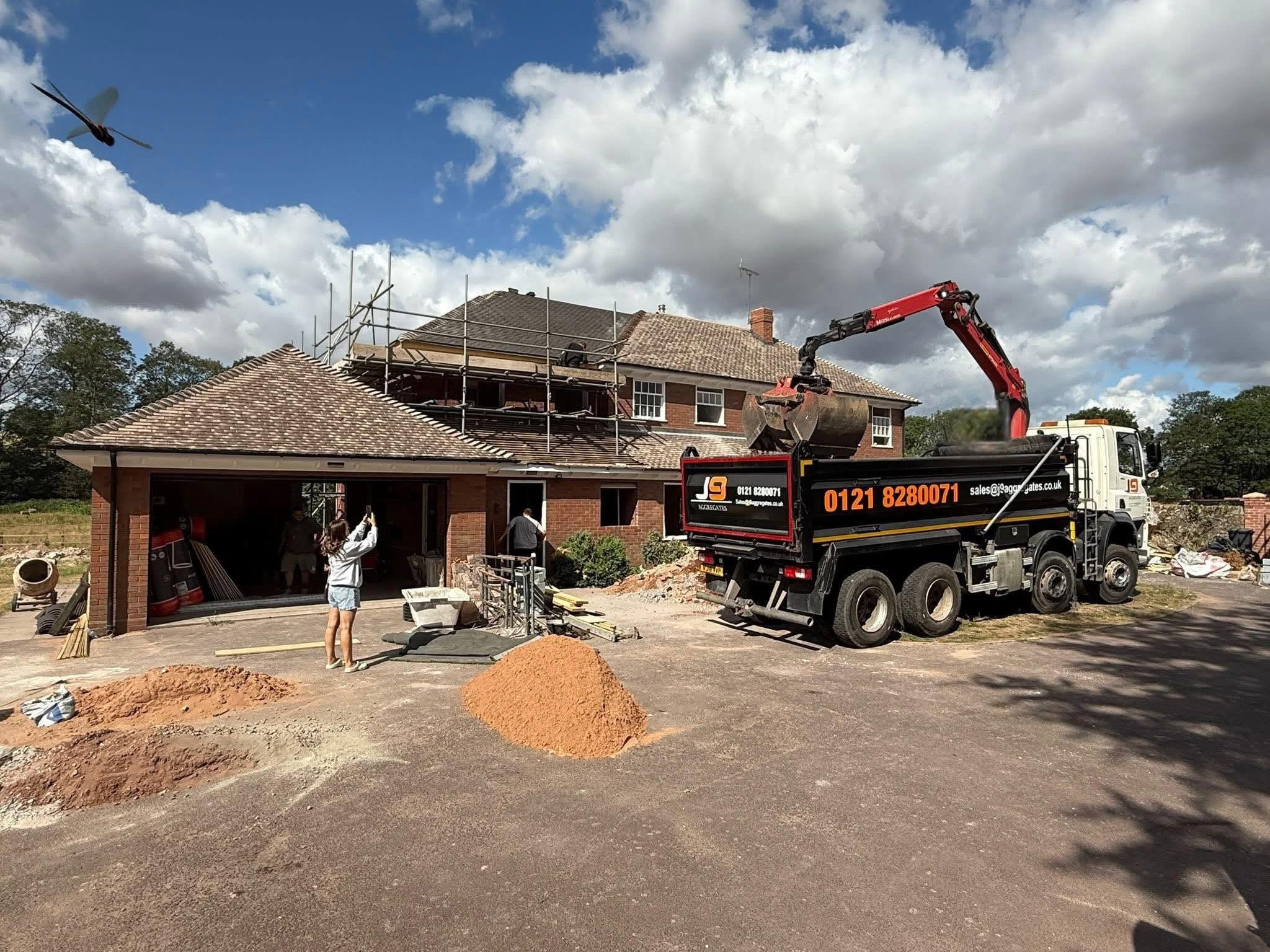

8-wheel grab
Default for awkward loads. Muck heap behind a fence, no machine on site, single-load domestic jobs. Self-loads in 20 minutes.

Driveway dig-outs, garden levelling, patio rip-ups, landscaping spoil. Soil, clay, hardcore and inert waste gone in 20 minutes. Single-load grab from our Walsall yard, fixed price, no skip on the kerb.
What muck-away is
"Muck away" is what landscapers, gardeners and homeowners call it. Trade and civils customers call the same thing "grab hire". Either way, it's the same 8-wheel grab lorry from our yard, lifting your soil, clay, hardcore or rubble straight off the ground and tipping it at a licensed inert facility. If you're a contractor, our grab hire page covers the trade angle.
How we move it
Most West Midlands muck-away runs on one of these. We'll tell you which on the quote, depending on access, tonnage and whether there's plant on site loading.
Default for awkward loads. Muck heap behind a fence, no machine on site, single-load domestic jobs. Self-loads in 20 minutes.
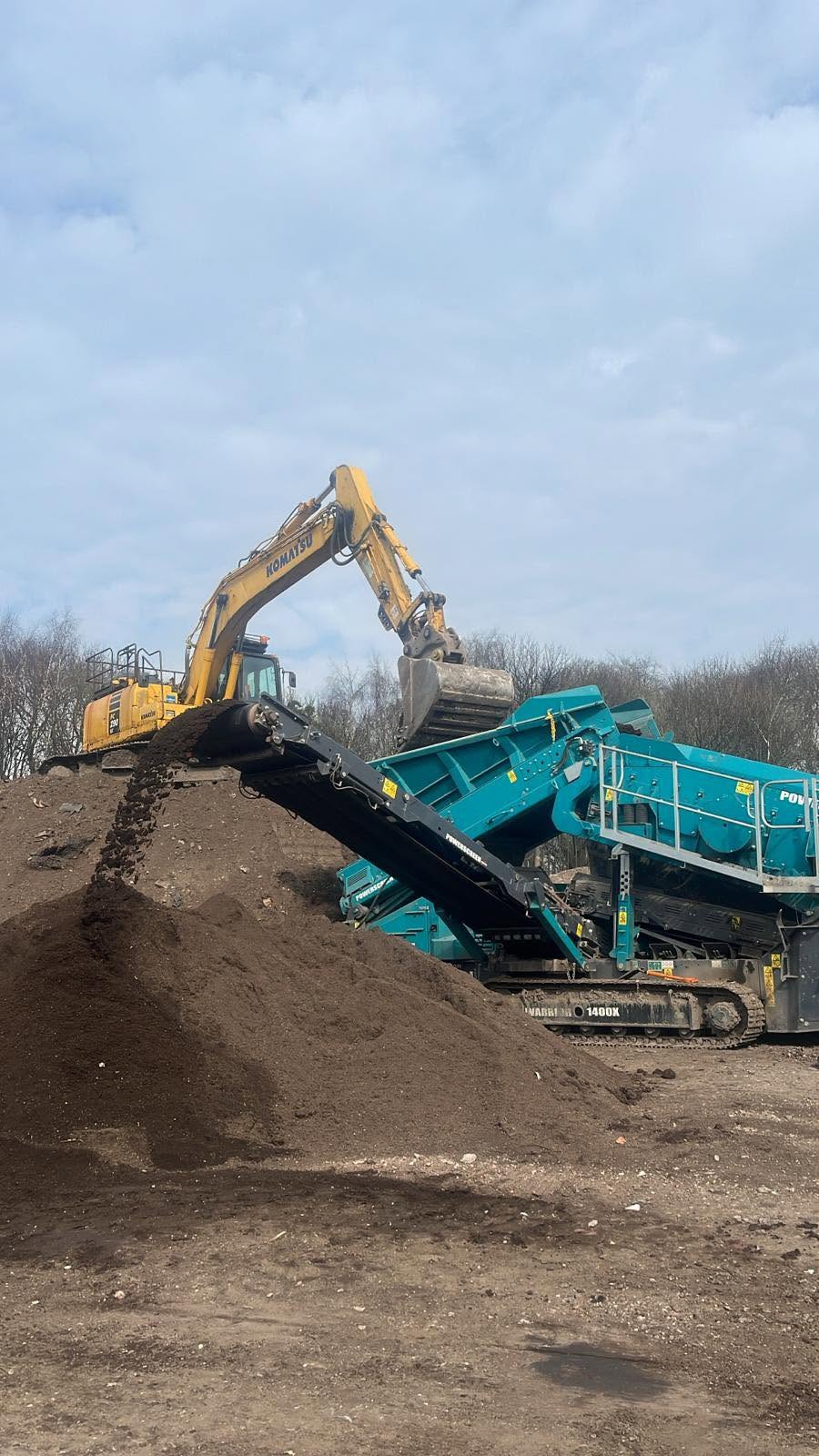
Volume work: civils, demolition, anywhere you've got an excavator loading at speed. 80–160 tonnes per truck per day on local runs.
Single-track lanes, mews, suspect surfaces, city-centre access. Less payload, smaller turning envelope.
Material classification
The class your material falls into decides the gate fee at the tip, and therefore your price. If your dig is mixed or there's any chance of contamination, tell us up-front. Honest paperwork is cheaper than a rejected load.
Clean inert
Lowest gate fee
Mixed inert
Mid-tier gate fee
Classify first
WAC test before booking
Won't take
Specialist disposal route
Black Country contamination
Walsall, West Bromwich, Tipton, Smethwick, Wednesbury, Bilston. Leatherworks, foundries, gasworks, chemical plants, metal-bashing. The made ground that builders dig through today is frequently contaminated, even on sites that look unremarkable from the surface.
The Environment Agency takes a dim view of operators who dump made ground at an inert tip without doing the basic chemistry. Contractors get fined heavily, and sites get stopped mid-build, for shifting a few loads to the wrong facility without a WAC.
If your site is on former industrial land, expect us to ask for a Phase 1 / Phase 2 report or a WAC sample before we book. A few days, a few hundred pounds in lab fees, and a five-figure mistake avoided.
Paperwork
WTNs name the producer, the carrier, the destination, the EWC classification, the quantity, the date. If you can't produce one when the EA ask, you're liable, not us. So we send every WTN to you the morning after tipping, and keep our copy on file.
Every load. WTN and tipping ticket in your inbox before the dispatcher's poured a coffee. You don't have to ask.
Statutory minimum for producer and carrier. We keep our copies for longer, retrievable on request, which is useful when QSes audit twelve months later.
Multi-day or rolling muck-away gets a season-ticket WTN covering regular movements, plus individual tipping tickets per load.
Common jobs
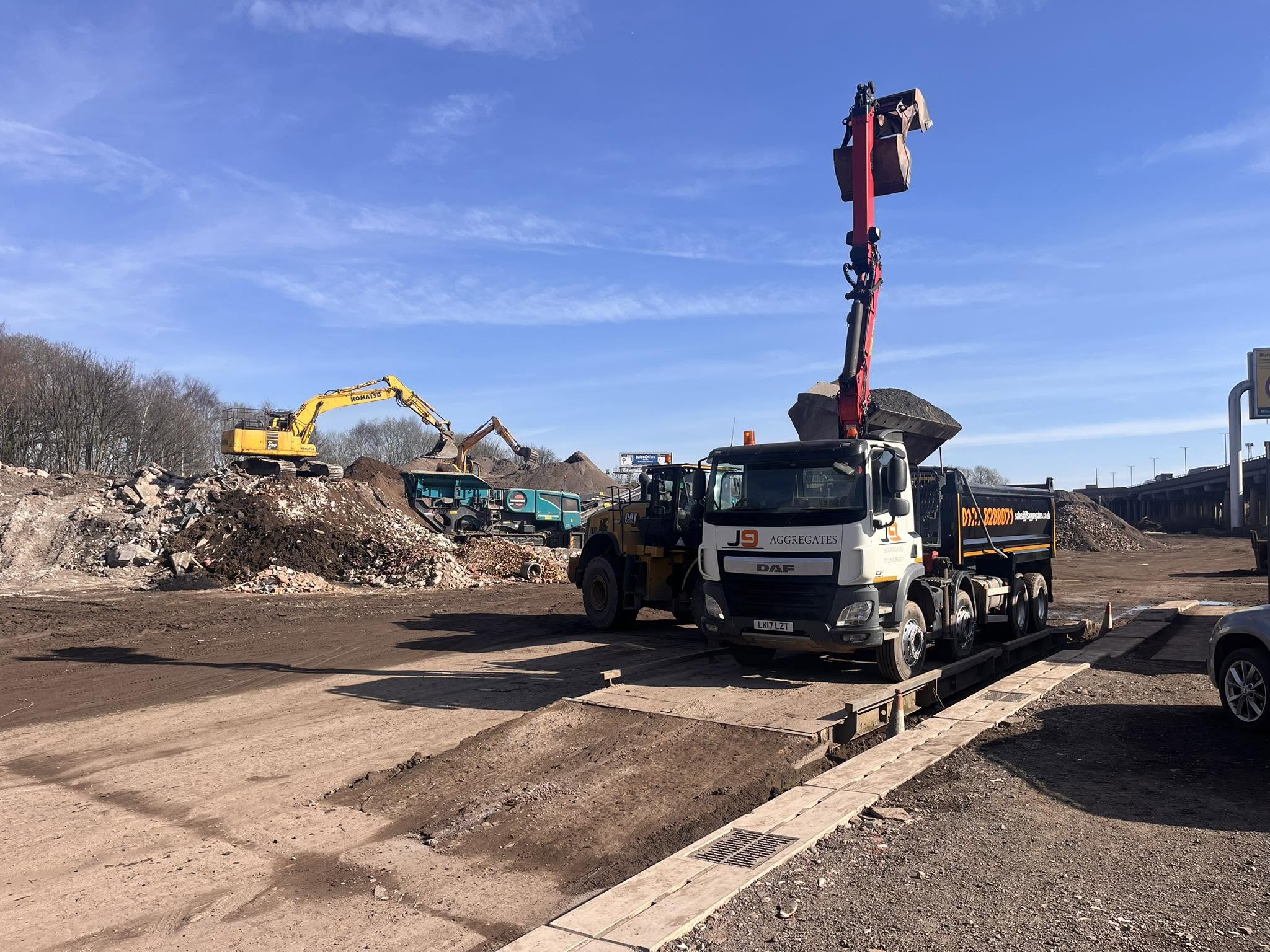
Single-storey rear extension: 8–14t, one grab. Double-storey with footings: 25–35t. Basement conversions in Edgbaston, Sutton Coldfield, Solihull regularly hit 100–200t+.
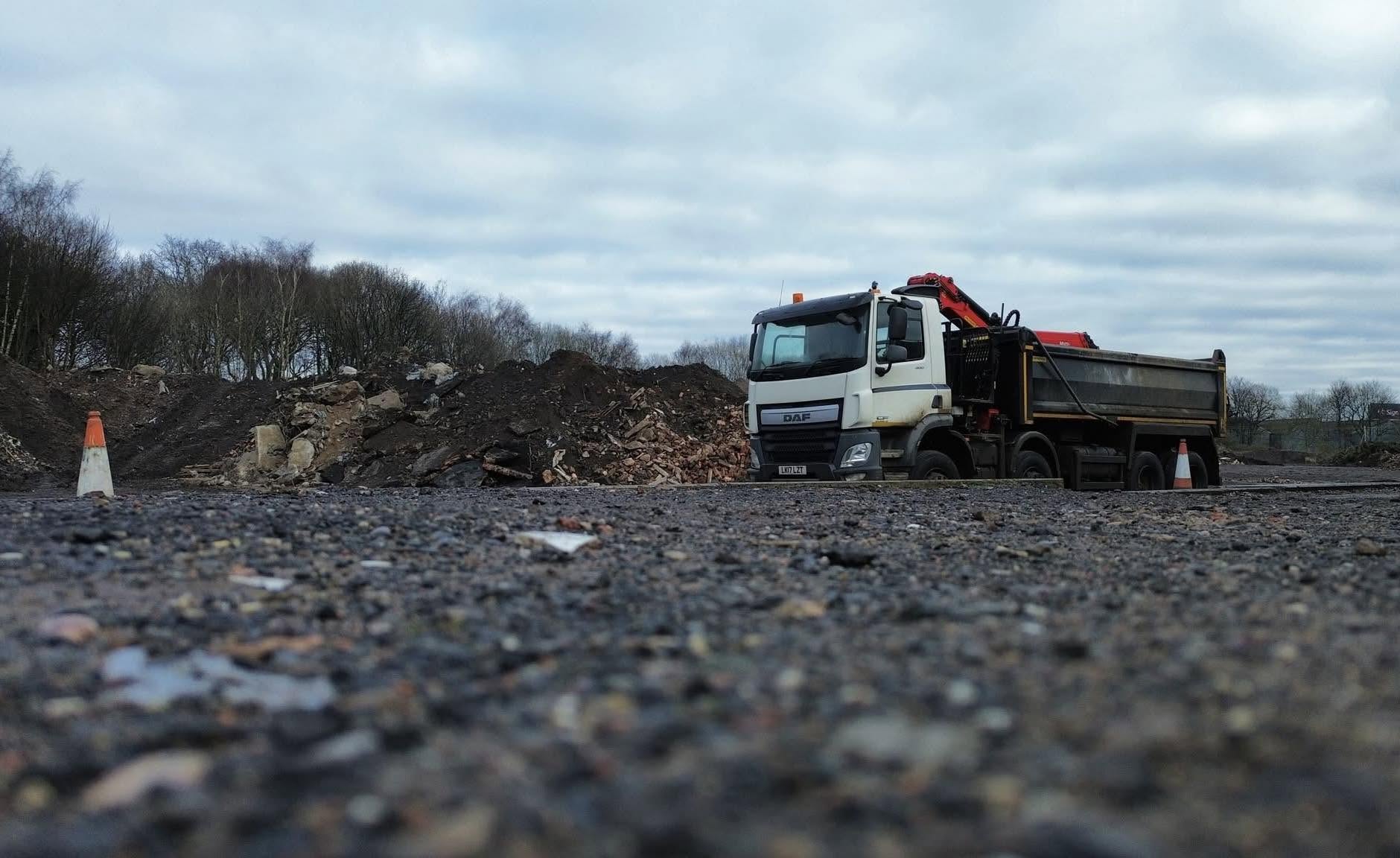
Standard semi-detached strip-out runs 6–10t (block paving, sub-base, kerbs). One grab, in and out before lunch. Deeper over-built sub-bases push it higher.
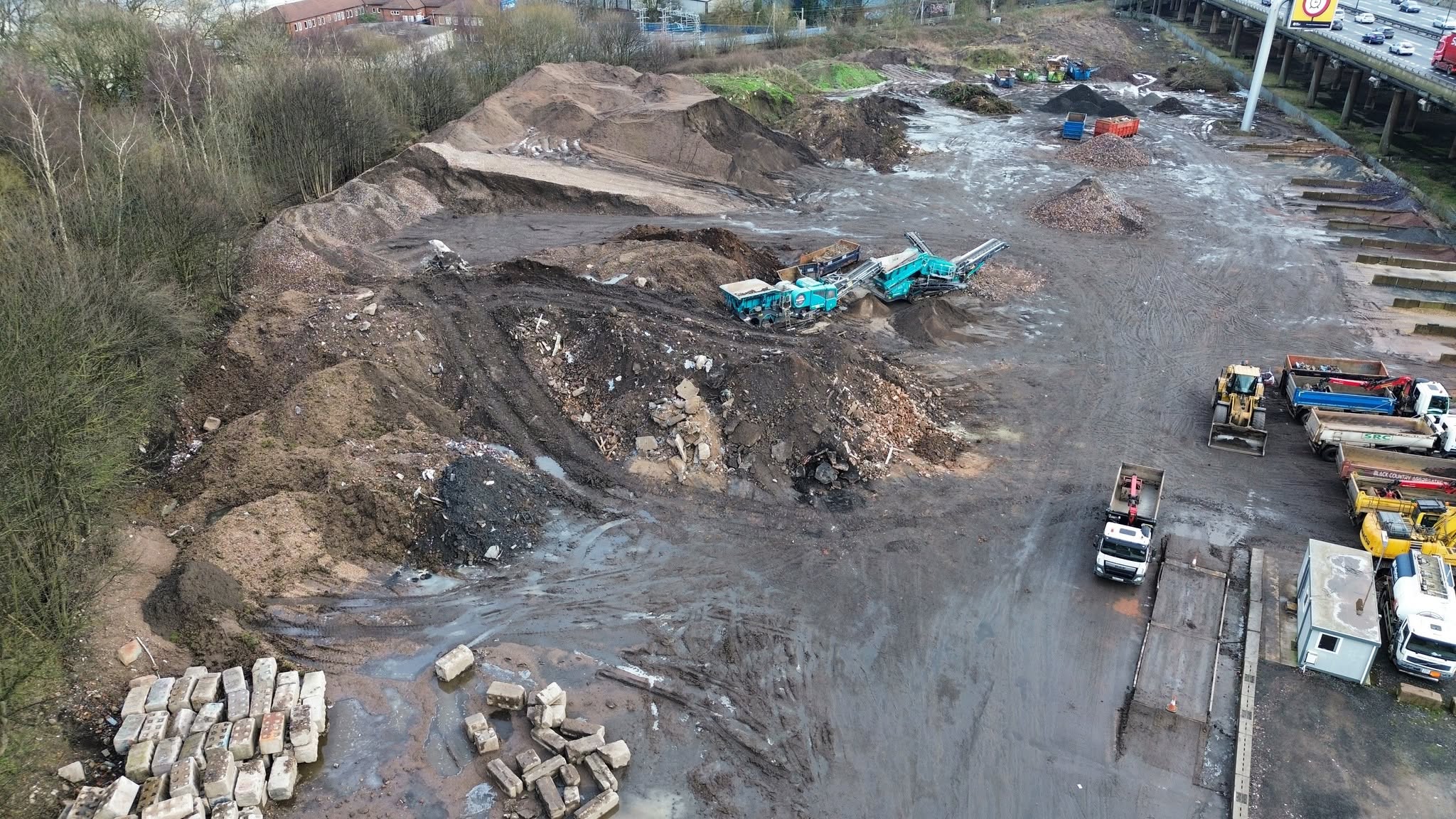
Infill plots in Smethwick, Wednesbury, Bilston, Tipton. Often two phases: a mixed-waste tipper to a transfer station first, then a clean grab run for the dig.

Utility upgrades, highways resurfacing, infrastructure. Weighbridge tickets per load, full duty of care and liaison with the client's QS.
Pricing
Muck-away is priced per load, not per tonne, in 95% of cases. High-tonnage civils gets a per-tonne rate against an agreed weighbridge tip.
Clean inert is cheapest. Mixed costs more. Anything routed via a transfer station rather than an inert tip can run double, because gate fees are 3–4× higher.
The further from Walsall and from the nearest licensed tip, the higher the price. Coventry, Stafford and eastern Lichfield cost more than Black Country jobs, because we fit fewer loads into a day.
Full-day programmes get 10–20% off the per-load rate because we're not paying for empty running. Tell us the total estimated cube on the quote and we'll price the full job.
Coverage
Same-day inside the Black Country if booked before 11am. Next-day for the wider West Midlands. Locked slots for programmes weeks out.
FAQs
£180–£250 inc. VAT for a standard 8-wheel grab load of clean inert spoil in the West Midlands. Mixed material runs higher because the tip gate fee is higher. Long-distance jobs or those requiring transfer-station disposal cost more again. Full pricing breakdown.
Yes, legally required for every commercial waste movement under the Environmental Protection Act 1990. The producer and the carrier both have to keep copies for two years. We generate and email yours the morning after every load. More on duty of care.
Sometimes, but we need a WAC test or contamination report first. The result tells us whether the material can go to a standard inert tip, a non-hazardous landfill or a hazardous facility. Each tier costs more. We'd rather slow the booking by a few days than tip your spoil somewhere it shouldn't go.
Muck-away is the job: getting spoil off your site under proper paperwork. Grab hire is one method (a grab lorry with a hydraulic arm). Most domestic and small-site muck-away runs by grab. High-tonnage civils muck-away usually runs by tipper because a digger can load a tipper faster than a grab loads itself.
One 8-wheel grab will turn 2–4 loads per day depending on tip distance, which is 32–64 tonnes per truck per day. For larger jobs we run multiple vehicles on shuttle. We've moved 500+ tonnes in a single day from civils sites in Birmingham and Coventry.
It's expensive and avoidable. If the tip rejects, the load goes to a higher-tier facility (you pay the difference) or back to a transfer station. The way to avoid it is honest paperwork up-front. If there's any chance of contamination, we test before we book. We won't move material we suspect will be rejected without telling you.
Yes. Upper Tier Waste Carrier registration (CBDU number), the licence tier required for commercial muck-away. Number listed on our accreditations page.